

Overview
Play Donkey Kong Jr. (Japan) (Disk Writer) online
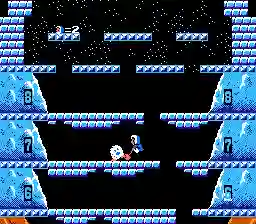
Experience classic Nintendo arcade nostalgia as DK Jr. in this 1983 platformer for the Famicom Disk System. Climb vines, outsmart enemies like Snapjaws, and rescue Donkey Kong from Mario in a nostalgic gameplay role reversal for retro enthusiasts.
Donkey Kong Jr. (Japan) (Disk Writer) gameplay overview
Released originally in 1983 at arcades and brought to the Famicom Disk System, Donkey Kong Jr. flips the script on the 1981 hit. Instead of playing Mario chasing his escaped ape, you control Mario's captive beast of burden from the original game, now turned hero: Donkey Kong Jr., on a mission to free his father. This FDS version, specifically using the Disk Writer service, delivers a unique slice of Nintendo history—that peculiar era where magnetic discs with save features replaced carts and featured slightly better sound for a sequel that many still consider tougher than its predecessor. Donkey Kong Jr.
- FDS listing context: Donkey Kong Jr.
- A Role-Reversal Deep-Cut: The star of this 1983 follow-up isn't the mustachioed plumber, but his tiny tormentor's son; rescuing the big lug from a quartet of platforming prison cells manned by a mustachioed keeper really twisted the narrative for early Nintendo fans.
- The Original Famed Four Screens: Each of its four unique stages—Jungle Vines, Spring Vines, Nuts and Vines, and a final climb in Factory Vines—tests a different platforming skill, demanding precision vine-climbing, clever route planning, and a steady hand through swarming Snapjaws and Nitpickers.
- Distinct Disk Charm: The Famicom Disk Writer variant carries the hallmarks of its format: the unique, almost hummus-like sound of the disk drive loading, the sharper clink of the keys you collect, and the absence of ROM mask limits, giving its graphics a distinct clarity I always appreciated against the cartridge version's slightly busier look.
Why play Donkey Kong Jr. (Japan) (Disk Writer) on Retro Games Zone?
Beyond nostalgia, this game forces a different kind of platforming patience, making a case for its unforgiving nature as its most rewarding feature. It's a fascinating pivot in the early Mario vs. Kong feud, showing Nintendo wasn't afraid to reinvent its star villain as a hero for a day. The disk version sits as a physical artifact of a short-lived consumer tech dream, a piece you play to feel a connection to a fleeting, ambitious period of Nintendo hardware.
- platforming fit focus on jump arcs, enemy placement, checkpoints, and any hidden route the stage design suggests.
- Test Your Platformer Mettle: If you've mastered the ladders of the original Donkey Kong, the hanging, swinging, and multi-tiered jumping required in Junior's journey up vine-racked cages and past electrical Spark wires will introduce a fresh challenge many find more demanding and, ultimately, more satisfying to conquer.
- Witness a Proto-Universe Evolve: Playing this is witnessing Nintendo's worldbuilding in real-time; you see the Kong family, Mario as a temporary antagonist, and those first seeds of the 'hero rescues a captured giant' theme that would later define Kirby and Kid Icarus. It’s a crucial, often overlooked, chapter in their character stable.
- Experience Obscure, Physical Gaming History: This isn't just any ROM; a 'Disk Writer' copy is like a pressed vinyl for video games—a direct duplication from master disks onto commercial blanks via Nintendo kiosks found in Japanese stores. You're effectively playing a piece of 80s gaming infrastructure, a unique software delivery method they abandoned within a few years for the robust Game Pak.