Overview
Play Galaga (Europe) online
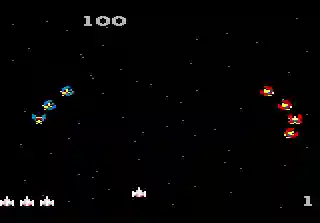
Relive 1981 arcade perfection with Galaga (Europe) on Atari 7800. Battle iconic alien formations, master the dual-fighter capture, and chase high scores in this essential retro space shooter classic for true enthusiasts.
Galaga (Europe) gameplay overview
Namco's 1981 shooter sequel Galaga took everything great about Galaxian and dialed it to eleven, introducing challenging enemy choreography and one of the coolest mechanics in arcade history. Its 7800 port in Europe faithfully delivers those frantic swarms of dive-bombing alien insects and the moment you realize controlling two fighters changes everything.
- Galaga version details
- Formation Patterns as a Puzzle You Have to Solve With Lasers: You're not just shooting random bugs—the Bees, Butterflies, and Galaga Boss Flagships fly in distinct attack patterns you learn through repetition. Later stages throw multiple enemies in synchronized diagonal dives requiring you to memorize spaces between shots instead of just pressing fire.
- The Dual-Fighter Tradeoff Is a Brilliant Risk/Reward Gamble: When that tractor beam locks onto your fighter, letting it get captured isn’t a guaranteed loss. It’s a tactical choice—if you can destroy the capturing Galaga without damaging your own ship, you rescue it and gain two ships, side-by-side, capable of overlapping beams.
- Those Unsettling Buzzing Sounds Are Burned Into a Generation: From that sharp, high-pitched entry squeal to the frantic insectoid hum as they get close, Galaga's audio cue system is a gameplay guide. When you have twenty Zako Galagas spiraling at once from three angles on the 7800—the noise truly sounds like a swarm.
Why play Galaga (Europe) on Retro Games Zone?
Where Space Invaders felt like defending artillery, Galaga creates the sensation of fighter pilot dogfights in cramped space—a level of dynamism that defined arcade shooters for the next decade. The 7800 version, especially in Europe where fewer cabinets existed, feels more like having a dedicated cabinet in your home without the constant search for spare quarters.
- A Game About Rhythm, Punishment, and That One Clean Run: You'll curse a stray Zako's kamikaze run that ruins your dual-fighter setup, but you'll keep restarting because getting into Galaga's groove—reading the attack waves, threading those overlapping shots on the flagship—creates a trance-like state. Even the bonus stage feels earned.
- Port Perfection Without Cabinet Compromise on Atari: The European 7800 version didn’t just emulate—it properly converted. The distinctive red, white, and blue enemy coloration and recognizable formation patterns were preserved faithfully. It ran as fast as the best American hardware at the time.
- One of the Earliest, Clearest Examples of Player-Agent Difficulty Scaling: The game subtly increases challenge based on your performance. Playing to an overly cautious, high-score survival tactic? Expect to see more aggressive formation breaking and double-tap dive cycles from enemies. Aggressive power gamers? Different spacing timers are triggered.