

Overview
Play Kung-Fu Master (USA) online
Master side-scrolling martial arts action in Kung-Fu Master for the original Atari 7800. Relive authentic 80s arcade combat across 5 stages - pure retro gaming nostalgia perfect for all fans of beat em ups.
Kung-Fu Master (USA) gameplay overview
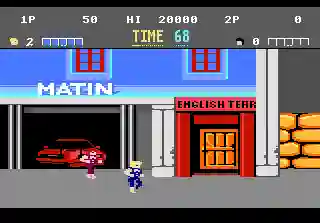
Hitting arcades in 1984 before landing on the Atari 7800 two years later, Kung-Fu Master established the blueprint for the entire side-scrolling beat 'em up genre. You play Thomas (known as simply "the martial artist" on the US port), fighting through a five-story tower filled with thugs to rescue your girlfriend at the very top. Its simple one-button, multi-directional fighting system hides immense depth, forcing you to master precise jump kicks and crouching punches against a relentless tide of knife throwers and whip-wielding mid-bosses.
- Kung-Fu Master platform notes
- Blueprint of a Genre: This isn’t just *a* classic; it’s *the* classic that mapped out the formula for games like Double Dragon. The side-scrolling multi-floor brawler structure, the mix of weapon-based and hand-to-hand foes, even the climactic multi-wave boss fight—Kung-Fu Master’s template is echoed in most belt-scrollers that came after it.
- The Punishing 80s Arcade Spirit, Intact: Its difficulty hasn't softened with the decades. The third floor, with its swarming Tengu, remains a brutal checkpoint that demands pixel-perfect jumps and a deep understanding of attack patterns. You aren’t just fighting thugs—you’re fighting the quarter-munching arcade ethos captured in a cartridge, complete with one-hit deaths from snake pits and falling chandeliers.
- Simplicity Forged into Strategy: You've primarily got one attack button, yet the complexity emerges from how you hit that button. Mastering the jump kick's arc, the extended reach of a crouching kick to hit low-flying daggers, and knowing exactly when to lunge forward or walk backward transformed a basic move set into a dynamic martial arts puzzle for each new hallway and stairwell.
Why play Kung-Fu Master (USA) on Retro Games Zone?
Beyond its historical gravity, it's simply a masterclass in satisfying friction. Every punch has clear weight, every enemy has a very deliberate rhythm, and beating each distinct building feels monumental, from navigating stage two's moving platforms to facing the hulking, staff-wielding 'Giant' as he lobs sticks of dynamite. It’s a game where you feel your skill developing stage-by-stage against a formidable challenge.
- gameplay fit
- Unadulterated Core Combat Focus: Modern games in any genre ask you to level up, collect gear, or explore. This one tells you very plainly, 'Get to the top.' There are no RPG mechanics, cutscenes, or gear management—just you, your reflexes, and a tower full of villains. It’s a brawler in its purest, most focused form. That singular drive toward self-betterment is a potent, refreshing drug that still hooks players today.
- A Landmark of Physical Ingenuity: Kung-Fu Master showcases game design that directly responded to the hardware's physicality. Those snake- and scorpion-filled pits? They forced you to actually duck or climb, using the whole controller beyond just 'hit attack.' When the chandelier falls on you early on, it teaches you to look at the entire environment as your enemy. This tight physicality is missing from many high-res contemporaries.
- Learn, Execute, or Suffer: You can't simply mash a powerful button combo; there weren't many combos to be had in 1984. Progress depends entirely on observing your opponents' patterns and learning to dance around them. Knowing the whip guy on floor four will strike every three seconds, and that his strike height changes, creates a tension more gripping than many modern spectacle-based action titles. Failure here teaches you something—your win stems entirely from execution based on your earned knowledge, not game-assisting luck.